
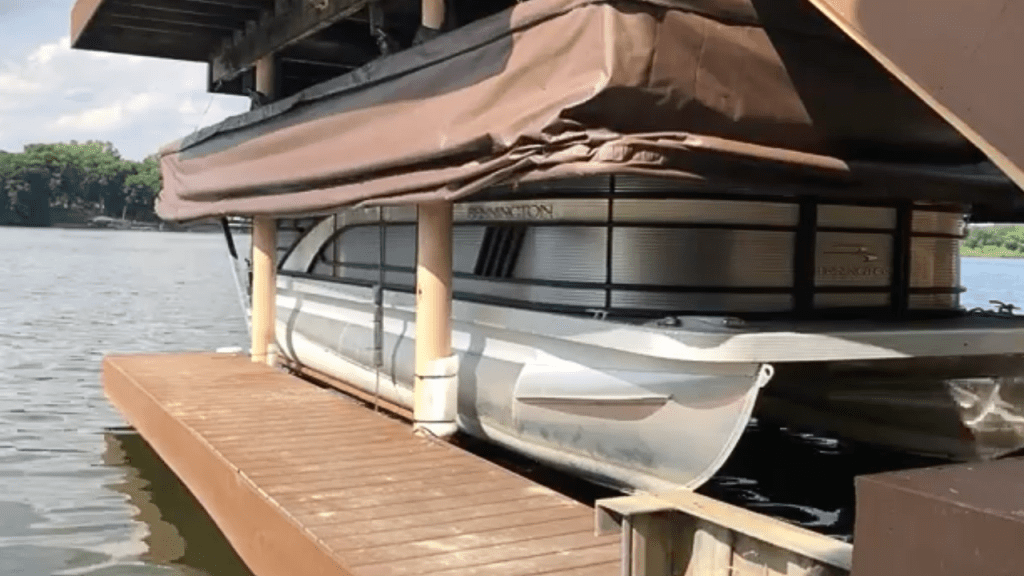
A pontoon boat can sit uncovered after long rides and still look fine from the house. The problem starts closer. Sun cooking the top of the vinyl, damp towels leaving moisture on the cushions, the upholstery left exposed even after everyone walks away. A pontoon works like a floating living room, so its cover habit needs to protect the places people sit, steer, eat, charge phones, and store gear.
Pontoon growth changed what owners need to protect
Pontoon ownership has moved well beyond the old slow-cruise stereotype. Pontoon and Deck Boat Magazine reported that pontoons held 37.2 percent of the outboard product mix in 2024, more than one third, and the category has held the number one position since 2009 according to its NMMA-based report. Boating Industry, using NMMA 2024 sales stats, also reported 52,000 to 55,000 new pontoon units sold in 2024, making the category a volume leader even as the broader market softened. NMMA’s 2020 press release showed freshwater fishing boats and pontoon boats together reached 144,700 units, up 13 percent.
Those numbers matter – because boats seem to be getting newer, larger, and more comfortable. Info-Link Technologies reports about 1.3 million pontoon boats registered, with 54 percent purchased new or pre-owned during the past five years. Boating Industry also reported a 2021 registration peak of 66,280 pontoons, up from 57,287 in 2019.
The weak spot is not the metal tubes
A pontoon’s lower metal tubes do not need the same daily coverage as a standard gelcoat hull. The exposed comfort areas need the attention. Vinyl seating, stitched cushions, flooring, tables, cup holders, speakers, chargers, touchscreens, switches, and marine electronics face the sun, dew, pollen, sunscreen, and rain.
That is why a generic cover habit can miss the point. The owner is not only covering a boat. They are protecting a lounge, a dining space, a swim base, and a navigation station. Brands such as Bennington, Harris, Barletta, Avalon, Godfrey, Sun Tracker, Sylvan, and Manitou have pushed pontoons toward comfort and power. Tri-toon layouts and high-horsepower engines also let families use the same boat for cruising, tubing, and long days hanging around the dock.
A cover only helps when the habit holds
Loose pontoon boat covers can work when owners use them correctly. The problem is the end of the day. People are tired. The sun is still hot. Towels are wet. The boat grill, cooler, snack bags, and float ropes need to be moved. Someone intends to come back after dinner to take care of it all… then the cover stays folded.
A better habit starts before you get off the boat. Remove wet towels and food. Wipe sunscreen from seat tops and armrests. Check seams where crumbs collect. Dry the helm after spray or rain. Open damp storage compartments when possible. Look at the electronics, because screens and switches often take exposure quietly until wear shows later.
Common mistakes that make the routine fail
Covering over moisture
A tight cover can trap damp air against upholstery and stitching. If the seats are wet, wipe them first and let the worst moisture clear before covering the boat.
Treating the helm like an afterthought
The console carries controls, chargers, displays, wiring, and switches. Give it the same attention as the seats.
Making one tired person do everything
If several people use the boat, assign the final dock check. Shared responsibility often becomes less responsibility and possibly a bit of fun!
When a better system makes sense
Dream Yacht Sales lists the global pontoon market at roughly 8 to 9 billion dollars in 2026, with projected growth of 7 to 10 percent. That market growth reflects how owners now expect pontoons to serve as comfort platforms, family boats, rental boats, fishing spaces, and watersports rigs.
For owners who use the boat often, the right system reduces the friction that ruins the habit. Touchless Cover® can help by making it easier to cover the seating area and helm without dragging loose canvas across the pontoon after every ride. It does not replace cleaning, drying, or checking the boat. It supports a routine that owners are more likely to repeat.
Build the habit around the boat you actually own
A good cover habit starts with the way your pontoon gets used. If the boat sits in full sun, protect the vinyl before heat and UV do slow work. If the family eats aboard, clean the seams before covering. If your helm has marine electronics, keep the console out of daily exposure whenever possible.
Pontoons became popular because they make time on the water easier and more comfortable. The cover routine should fit that same reality. Protect the tubes as needed, but build the habit around the seats, helm, and equipment that make the boat worth using well over many seasons.
1-877-679-2217